
Farm Life: Harvest Tycoon
Miniclip.comArcade
4.773.00 Reviews
- Version
- 1.3
- Installs
- 100.00K
- Age Rating
- Everyone
Screenshots
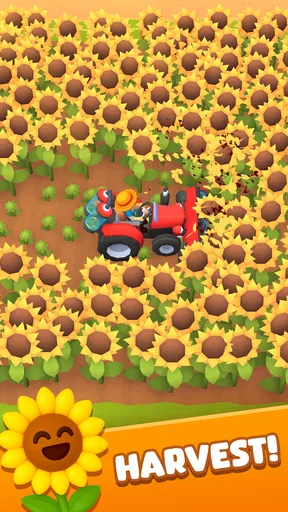
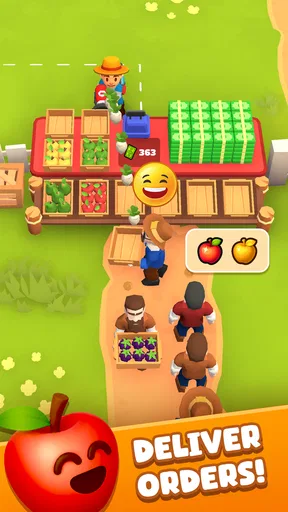
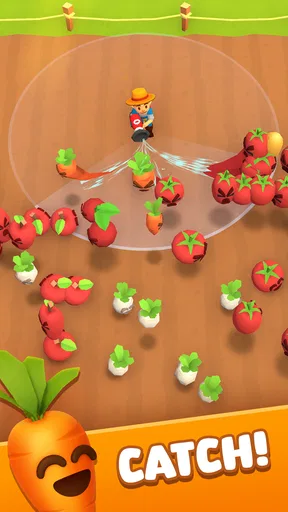
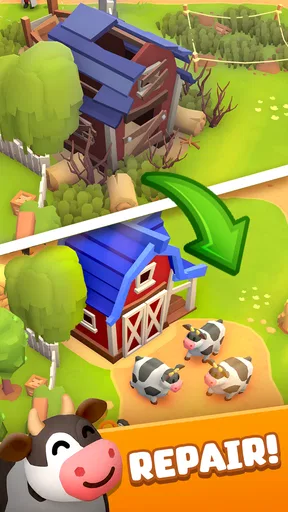
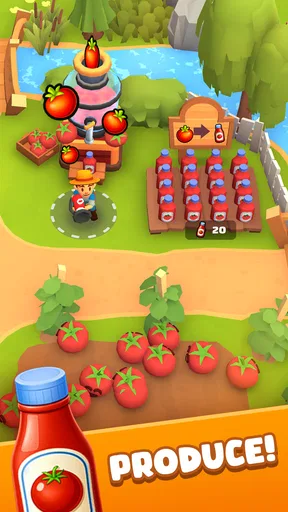
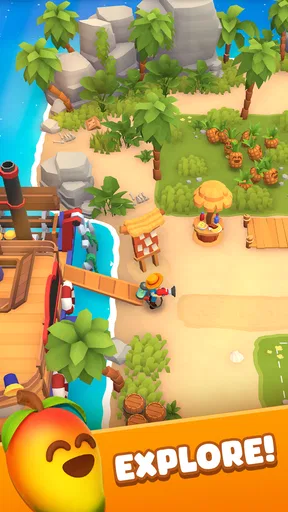
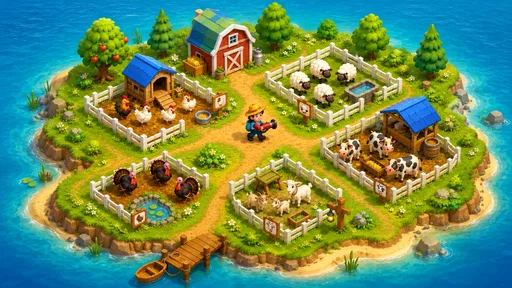
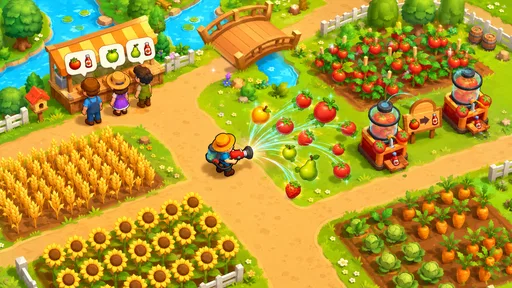
Our Review of Farm Life: Harvest Tycoon
 Analysis by Appyee
Farm Life: Harvest Tycoon is the kind of arcade game I open when I want a quick, easy-to-understand farming session rather than a complicated simulation. The basic appeal is immediate: gather what the land and animals produce, turn that activity into progress, and gradually make the farm feel more productive. It is a light management loop wrapped in a bright, approachable package, and I found it most enjoyable in short sessions where I could make a little progress without needing to plan an entire virtual economy.
What makes it worth considering is the combination of simple collection and longer-term improvement. You are not only catching fruits and vegetables; the wider goal is to harvest crops and animal goods while building a larger farm business. That gives each small action a reason to exist. The game is free to start, rated for Everyone, and developed by Miniclip.com, so it is clearly aimed at a broad audience rather than experienced strategy players alone.
Still, the relaxed presentation should not be confused with unlimited depth. I enjoyed the accessible rhythm, but players looking for a detailed agricultural simulator, a large social world, or a highly demanding arcade challenge may eventually want something more specialized. My experience is that this game works best when treated as a friendly, repeatable time-filler with some light planning, not as a replacement for a full farm-management game.
How the everyday farm loop feels
The most useful way to approach Farm Life: Harvest Tycoon is to establish a simple routine. I begin by checking what can be collected, then I move through the available farm activities in a consistent order instead of tapping randomly. Fruits and vegetables provide the immediate arcade-style interaction, while crops and animal goods give the session a broader sense of purpose. That contrast keeps the game from feeling like one repeated gesture from the first minute onward.
For a casual player, the workflow is easy to understand. Collect what is ready, use the resulting progress to improve the farm, and return when there is another reason to interact with it. The game does not require me to learn a complicated control scheme before I can enjoy it. This is a genuine strength for younger players and for anyone who wants something that can be picked up while waiting for a bus, taking a break, or relaxing before bed.
A realistic daily scenario is a short lunchtime session. I can open the game, clear the most obvious available tasks, decide whether a crop or animal-related activity deserves attention, and close it without feeling that I have abandoned an elaborate strategy. Later, I can return and continue from the same general routine. That makes the game more comfortable than arcade titles that demand constant concentration, while still giving me a reason to check back.
The important habit is to avoid treating every available action as equally urgent. If I tap through everything without noticing what I am trying to improve, the farm can feel busy but directionless. I get more from the game when I choose a small objective for the session, such as improving the flow of crop harvesting or making better use of animal goods. Even without turning the experience into a spreadsheet, that decision adds a little structure.
The arcade category matters here. Farm Life: Harvest Tycoon is not presenting farming as a slow, realistic profession. Its appeal comes from quick feedback, visible progress, and a cheerful sense of accumulation. Players who enjoy seeing a small operation become more capable will understand the attraction quickly. Players who prefer carefully balanced production chains, weather systems, land layouts, or detailed livestock management should adjust their expectations before installing it.
What I would do first as a new player
My advice is to spend the opening sessions learning the rhythm rather than trying to optimize every reward. Notice which actions are available immediately, which ones require more progress, and how the game encourages movement between crops, produce, and animals. That early observation is more valuable than rushing toward a single upgrade without understanding how the different parts of the farm support one another.
I would also resist spending anything during the first few minutes. The game is free, but it includes optional in-app purchases ranging from $0.99 to $119.99 per item. That is a wide range, and it makes a deliberate approach sensible. I prefer to understand whether the normal pace suits me before considering any optional purchase. A player who enjoys gradual progress may find that spending is unnecessary, while someone who dislikes waiting or repeated collection should think carefully about the value of any purchase before confirming it.
Another useful beginner habit is to keep the farm visually readable. When several activities are available, I focus on one area at a time instead of bouncing between every prompt. This is not about discovering a secret mechanic; it is simply a way to reduce careless taps and make each session feel more controlled. In a game built around collecting, a calm route through the available activities is often more satisfying than frantic movement.
Settings and phone habits that make a difference
There is no reason to overcomplicate the settings before playing. I would first check the device’s sound level, notification behavior, and battery situation. A collection-focused arcade game is easy to play silently, and turning down sound can make it more suitable for public places or shared rooms. On the other hand, keeping some audio on may help the game feel more lively during a relaxed session at home.
I also recommend checking the phone’s purchase protections before handing the device to a child. Because the game is suitable for Everyone but offers optional purchases, the safest routine is to make sure accidental confirmations are not easy. That is a practical device-management step, not a criticism of the game itself. It lets younger players enjoy the farming loop while keeping spending decisions separate from casual tapping.
The minimum operating system is Android 7.1, which makes the game accessible to a broad range of Android devices. Even so, I would close unnecessary background apps if the phone is older or already struggling with performance. A simple game should feel responsive, and reducing background load is a sensible way to avoid turning a short farming session into a frustrating one.
Since the current version is 1.3, I would keep the app updated through the normal store process when an update is available. Updates can matter for stability and compatibility, especially on phones that receive operating-system changes. I would not expect a version number alone to transform the game, but using the current release is generally the cleanest way to judge how it is intended to run.
My strongest settings-related tip is to match the game to the moment. Use sound and notifications when you want a more engaging break, mute it when you need a quiet distraction, and avoid opening it during tasks that require uninterrupted attention. The relaxed format makes this easy, but the collecting loop can still encourage “one more action” behavior if I am not intentional about when I play.
Repeatable patterns for quicker, cleaner sessions
Experienced play in Farm Life: Harvest Tycoon is less about a hidden shortcut and more about consistency. I use the same inspection order each time: first look for immediately collectible fruits and vegetables, then review crop-related progress, and finally check what animal goods can contribute. The exact order can change with the farm’s current state, but having a default route prevents me from wasting time deciding where to begin.
A second pattern is to group actions by purpose. If I am trying to increase the farm’s general progress, I collect broadly and then make the most obvious improvement. If I am focusing on a particular part of the operation, I give that area priority rather than scattering attention. This helps me notice whether an upgrade actually changes my routine or merely creates a temporary feeling of progress.
I also find it helpful to stop after a meaningful cycle. A meaningful cycle might be collecting what is ready, completing a clear improvement, and checking the next available objective. Continuing to tap after that point can become repetitive without adding much satisfaction. Short stopping points are especially useful for players who want the game as a break rather than as their main pastime.
Another practical habit is to use waiting time thoughtfully. If the game presents a reason to return later, I treat that as a natural stopping point instead of repeatedly checking every few seconds. This keeps the experience from becoming a chore. The farm should fit around my day, not dictate it. That is one of the better ways to enjoy a tycoon-style game without feeling pressured by its progression loop.
For families, I would make the routine even simpler: choose one collection goal, let the child complete it, and then review the result together. That turns the game into a gentle exercise in sequencing and delayed reward without pretending that it is a full educational tool. The Everyone rating supports its broad accessibility, but younger players may still benefit from an adult explaining that optional purchases are real spending rather than part of the free starting experience.
Where the light strategy reaches its limits
The game’s simplicity is both its advantage and its main limitation. I can understand the basic loop quickly, but that also means the long-term decision-making may feel modest compared with deeper farming and management alternatives. If I want detailed production planning, complex resource chains, extensive customization, or a strong narrative layer, this is probably not the app I would choose first.
The arcade structure also means that repetition is part of the design. Catching and collecting can be satisfying when I am in the mood for it, but the same rhythm may lose its appeal if I play for long stretches every day. I would not recommend it to someone who needs constant mechanical variety or a difficult skill curve. Its challenge is more about maintaining a productive routine than mastering demanding controls.
Optional purchases are another point to consider. The game costs nothing to begin, which makes it easy to try, but the presence of items from $0.99 to $119.99 means players should decide in advance how they want to handle spending. I prefer to play without purchases until I know whether the ordinary pace feels rewarding. For some players, optional acceleration may be convenient; for others, it can weaken the satisfaction of building the farm gradually.
Compared with a traditional arcade game, Farm Life: Harvest Tycoon offers more persistence and planning but less emphasis on a single high-pressure score chase. Compared with a full farming simulator, it is quicker to understand and easier to play in short bursts, but it does not provide the same expectation of detailed control. Compared with a purely idle game, it gives me more direct interaction through catching and collecting, though it still benefits from the patient return-and-progress rhythm associated with tycoon games.
That comparison helps define the right audience. I would choose this game over a more demanding alternative when I want a colorful, low-friction break with a farm theme. I would choose another game when I want deep construction decisions, competitive leaderboards, a story-driven campaign, or a highly technical economy. Knowing that distinction prevents disappointment and makes the game’s modest scope feel intentional rather than incomplete.
Who will enjoy it most
Farm Life: Harvest Tycoon is a good fit for casual Android players who like visible progress and simple collection tasks. It also suits families looking for an approachable game that does not begin with a wall of instructions. The broad age rating, free entry point, and straightforward farm theme make it easy to recommend as a try-before-you-commit title.
It is particularly comfortable for people who play in short sessions. I can make progress without reserving a long uninterrupted block of time, and the farm gives me a familiar place to return to. That makes it more flexible than arcade games built entirely around immediate failure or games that expect every session to be a major event.
The game has also found a positive response among its current audience, with a 4.7 average from around 3.6 thousand ratings and more than 100 thousand installs. Those figures suggest that the accessible formula connects with many players, although they should not replace personal testing. A highly rated casual game can still be the wrong match for someone who finds collection loops repetitive.
I would skip it if my priority were deep simulation, intense competition, or a large amount of content that changes dramatically from session to session. I would also skip it if I know I am easily tempted by optional purchases and prefer games with no purchase layer at all. The free starting point is useful, but the spending range deserves a conscious decision before regular play begins.
My verdict after settling into the routine
After looking at the game as a daily habit rather than a one-minute trial, I see Farm Life: Harvest Tycoon as a pleasant, focused arcade farming experience. Its best quality is the clean connection between action and reward: I collect, improve, and return with a clearer sense of what the farm can become. The game does not ask me to master a complicated system before it becomes enjoyable, and that makes it easy to recommend to casual players.
Its weaknesses are equally clear. The same approachable loop can become repetitive, and players wanting a serious farming simulation will find the scope too light. The optional purchase range also means families and budget-conscious players should set boundaries before playing. Those are not reasons to dismiss it; they are reasons to approach it with the right expectations.
Miniclip.com has positioned this as an accessible farm-themed game rather than a demanding management tool, and I think that is where it works best. I would install it for short breaks, relaxed collection sessions, or a simple family-friendly game to explore together. I would not choose it as my only farming game if I wanted deep strategy or long-term complexity.
My final recommendation is simple: try it if you want a gentle arcade loop with crops, animal goods, and steady farm progress, but keep your sessions purposeful and your purchase settings under control. For the right player, that balance makes the farm feel rewarding without turning a casual game into another obligation.
Verdict
Strengths of Farm Life: Harvest Tycoon
- Simple controls make it easy for casual players to start farming quickly.
- Short tasks provide convenient progress during brief play sessions.
- Upgrading buildings gives the farm a satisfying sense of development.
- Bright visuals and cheerful animations create a relaxing atmosphere.
- A variety of crops and products adds useful variety to daily activities.
Limitations of Farm Life: Harvest Tycoon
- Progress may slow noticeably when upgrades require more resources.
- Frequent collection and production tasks can become repetitive over time.
- Some features may be locked behind level requirements or paid items.
- Limited space can make farm organization frustrating as the plot expands.
- The game may require an internet connection for certain functions.
Other Releases by Miniclip.com
View All
8 Ball Pool
Sports4.8

Carrom Pool: Disc Game
Sports4.4

Pure Sniper: Gun Shooter Games
Action4.8

Football Strike: Online Soccer
Sports4.8
Similar Picks in This Category
View All
Subway Surfers
SYBO Games4.6

Stickman Party 234 MiniGames
PlayMax Game Studio4.6

Subway Princess Runner
Ivy4.4

Temple Run
Imangi Studios4.2

Zombie Tsunami
Mobigame SAS4.6

Stack Ball - Crash Platforms
CASUAL AZUR GAMES4.5
Frequently Asked Questions
What is Farm Life: Harvest Tycoon about?
Farm Life: Harvest Tycoon is a casual farming and management game focused on building and expanding your own agricultural business. You typically plant and harvest crops, manage resources, unlock new areas, improve facilities, and earn money to grow your farm. Its progression combines relaxed farming activities with tycoon-style upgrades, making it suitable for players who enjoy steady progress and simple management decisions.
Is Farm Life: Harvest Tycoon free to download and play?
The game is generally available as a free download, allowing you to begin farming without paying upfront. However, free-to-play features may include optional in-app purchases for currency, boosts, upgrades, or other conveniences. Progress can usually be made through regular play, although some upgrades may take time. Check the store listing on your Android or iOS device for current pricing and purchase details.
Does Farm Life: Harvest Tycoon require an internet connection?
Farm Life: Harvest Tycoon may require an internet connection for certain features, such as advertisements, cloud synchronization, events, updates, or purchases. Basic gameplay could be available offline depending on the version installed, but offline progress may not always synchronize correctly. For the most reliable experience, launch the game online and review its current store description before depending on it during travel or without mobile data.
Are there advertisements or in-app purchases in Farm Life: Harvest Tycoon?
Players should expect that a free farming tycoon game may contain advertisements and optional in-app purchases. Ads can sometimes provide rewards such as extra coins, speed-ups, or useful bonuses, while purchases may help reduce waiting times or accelerate expansion. These features are not necessarily required to enjoy the game, but users should review the payment settings and consider enabling purchase restrictions, especially on shared devices.
Is Farm Life: Harvest Tycoon suitable for children and casual players?
Farm Life: Harvest Tycoon is likely to appeal to casual players because its farming tasks, harvesting loop, and upgrade system are easy to understand. The main considerations for younger users are advertisements, optional purchases, and any online interaction or data-collection practices described in the store listing. Parents should check the official age rating, privacy information, and device controls before allowing children to download and play.
Play our best games!


